








IAM increasingly important in education
Do you remember the time before digital education was the norm? It almost feels like a different era. Digital transformation had been underway for quite some time, but the COVID-19 pandemic accelerated it at an unprecedented pace. Practically overnight, schools switched to a new way of teaching. Digital transformation has permanently changed the education landscape. This transformation opened the door to new learning methods, while also ensuring that no educational institution can avoid the challenges that digitalization brings. While we benefit from e-learning and virtual classrooms, schools also face the challenges of security, privacy, and additional administrative overhead. Reports from Kennisnet and the Dutch Data Protection Authority highlight the importance for schools to manage their digital infrastructure securely and efficiently. This is where Identity & Access Management, IAM, comes in. An IAM solution enables educational institutions to operate more securely and productively in the digital era.
What is IAM?
Before we dive deeper into the specific challenges and benefits, let us first explain what IAM entails. Identity & Access Management refers to policies, processes, and technologies that ensure the right people, such as employees, students, and parents, have access to the necessary technology resources. In an education context, this means managing user accounts and access rights for a diverse set of users across many systems and applications. One specific example is sharing report grades in Magister. It is essential that students cannot view the grades of others, while they must have access to their own grades, as do their parents.
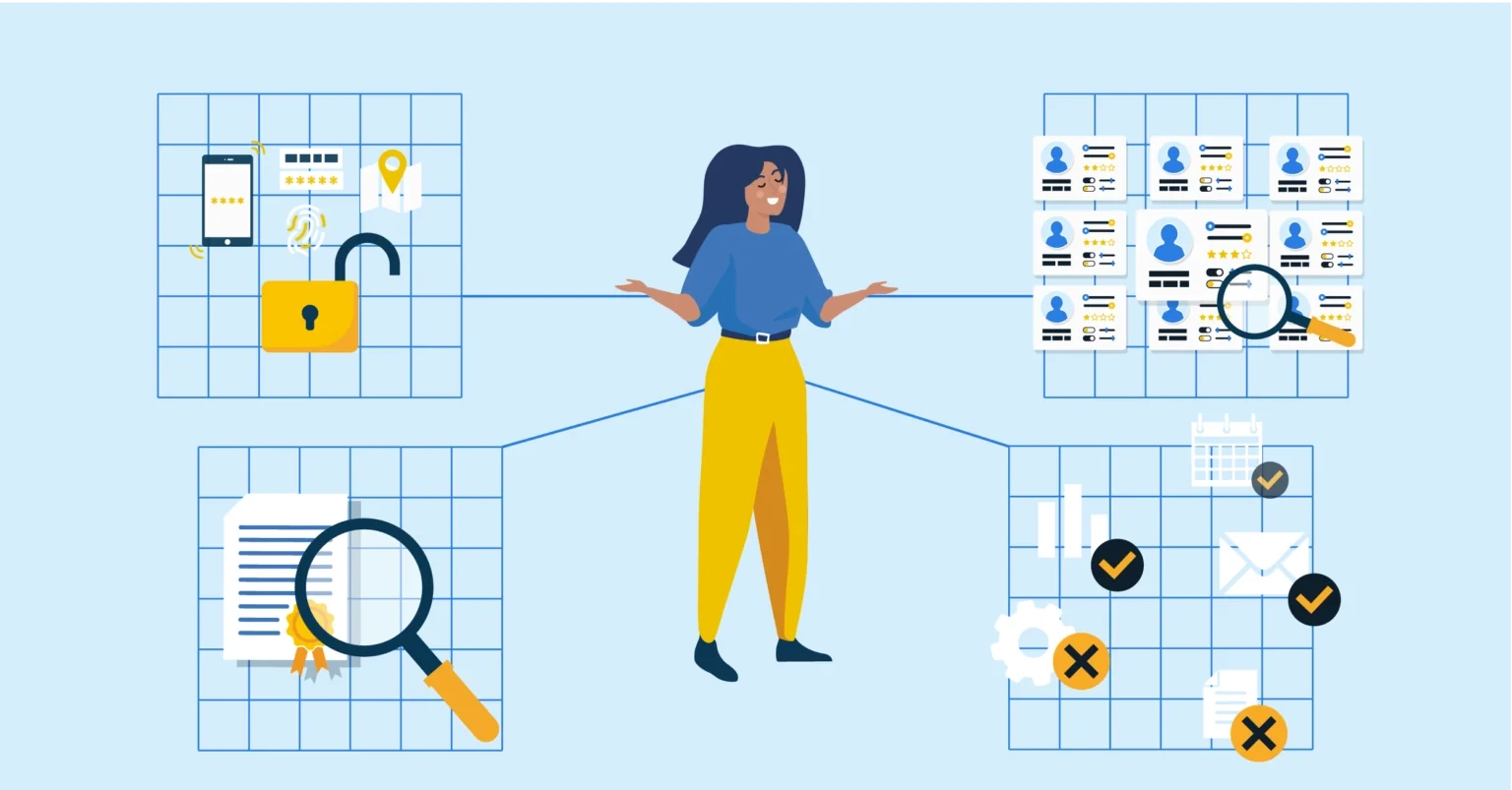
Key components of an IAM solution are:
User management: Centralized management of user data based on sources such as HR systems (HRM), Student Administration Systems (LAS), and Student Information Systems (SIS).
Authorization management: Access rights are assigned based on the user’s role, such as job function, department, class, school year, and subjects.
Authentication: Verification of whether the user, application, or device is who or what it is supposed to be. This ensures user-friendly and secure access to applications.
Auditing and reporting: Extensive logging and the ability to determine exactly who, why, when, and how certain rights or access were granted.
The challenges of digitalization
Rapid digitalization brings unique challenges for educational institutions. One of these is the management of digital identities. With the growth of online learning, it is crucial to have a secure and efficient way to manage access to digital resources. There are several considerations for managing digital identities effectively.
The nightmare of account management
The start of the school year often means chaos for IT departments. New students and employees must receive access to systems quickly. At the same time, accounts for departing users must be deactivated. This task becomes even more difficult because nearly all other users undergo annual changes as well. Consider students who change classes or choose new subjects, and teachers who start teaching different classes and students. The IT department often has to configure this in multiple systems, and if a mistake is made, it is even more time consuming to fix.
Protecting sensitive data
For cybercriminals, schools are gold mines of personal data, from personal identification data and student reports to financial data. The numbers are clear: in 2022, 21,151 data breaches were reported to the Dutch Data Protection Authority, 3% of which were in education . On top of that, 1,826 cyberattacks were registered, 7% of which targeted educational institutions. These statistics underline how important solid security measures are, and are likely only the tip of the iceberg. The Dutch Data Protection Authority advises always assuming potential data breaches and being proactive in protecting personal data.
“Assume that your personal data has already been leaked at some point, or that this will still happen. Make it a priority to protect your personal data.”
(Dutch Data Protection Authority, 2023)
Without such protection, schools are powerless against these attacks, which not only causes concern among students and parents about the safety of their data, but can also damage the school’s reputation.
Compliance and regulation
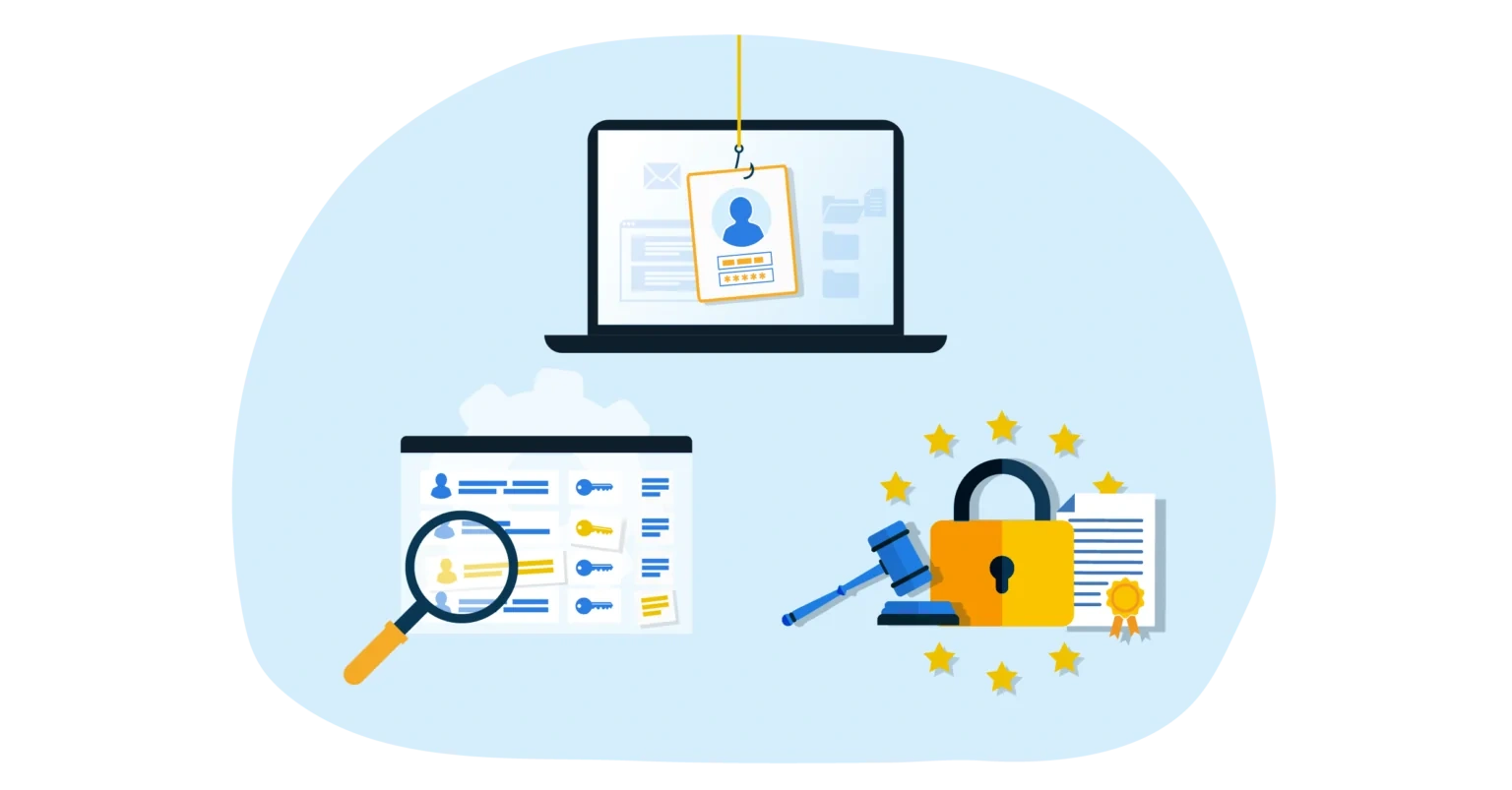
It is not only their own employees, students, and parents who expect schools to handle data securely. Schools must also comply with various laws and regulations, such as the GDPR and the IBP FO Standards Framework. This means schools must be able to demonstrate that the right security measures have been implemented. Without the right tools, this is nearly impossible. Schools then face greater risks of data breaches and cyberattacks, and risk legal issues and reputational damage.
How IAM helps
IAM can be a major help in addressing these challenges. By automating routine processes, IAM tools can significantly reduce the pressure on IT departments. They also provide enhanced security and help meet compliance requirements.
Automation and efficiency
Automating account management with IAM can help reduce the load on IT departments and eliminate the risk of errors. Based on HRM, LAS, and SIS systems, routine processes such as creating, modifying, and removing accounts and access rights can be automated. As a result, new accounts are always created and updated on time, while older accounts are automatically deactivated.
Enhanced security
By using advanced authentication methods, such as SSO and MFA, IAM reduces the risk of unauthorized access. In addition, comprehensive logging ensures that schools can trace who has had access to sensitive data.
For example, if an unexplained change is discovered in a student’s grades, logging enables schools to see exactly who accessed the relevant data and when.
Demonstrating compliance
IAM makes it easier to comply with laws and regulations by creating clear audit trails and ensuring that processes are always followed. This helps schools demonstrate compliance and keep their data secure.

Conclusion
IAM is no longer a luxury but a necessity for educational institutions. It enables schools to operate more efficiently and more securely, while demonstrably complying with laws and regulations. With the right IAM solution, schools can confidently address the challenges of digital transformation.
[1] Kennisnet (2023). Threat Landscape for Primary and Secondary Education. https://www.kennisnet.nl/app/uploads/Dreigingsbeeld-Funderend-Onderwijs.pdf
[2] Dutch Data Protection Authority (2024). Education Sector Overview. https://www.autoriteitpersoonsgegevens.nl/uploads/2024-01/Sectorbeeld%20Onderwijs%202021-2023.pdf
[3] Dutch Data Protection Authority (2023). Annual report on the data breach notification obligation 2022. https://www.autoriteitpersoonsgegevens.nl/uploads/2023-06/AP_Rapportage_datalekken_2022.pdf
[4] Dutch Data Protection Authority (2023). Annual report on the data breach notification obligation 2022. https://www.autoriteitpersoonsgegevens.nl/documenten/jaarrapportage-meldplicht-datalekken-2022