What is Identity and Access Management (IAM), and why is it important for HR?
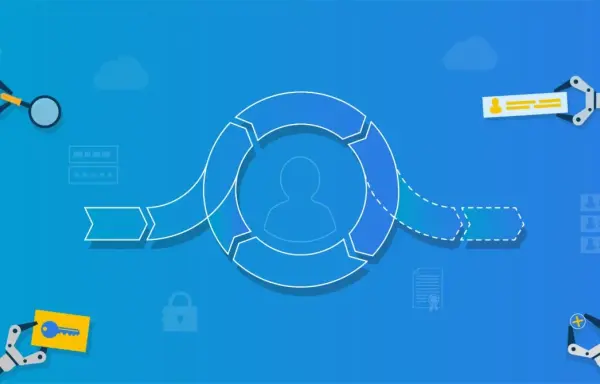
Identity and Access Management (IAM) controls user accounts and access rights to IT systems for all employees in an organization. New employees receive an account and, based on their role, access to the appropriate applications and shared resources. When an employee changes roles or positions, access rights must be updated accordingly. If the IAM platform applies these changes automatically using data from the HR system, updates are fast and accurate, requiring little to no follow-up from HR.
How does implementing IAM affect day-to-day HR operations?
In principle, the work remains the same, but many tasks become simpler. When new employees are entered into the HR system, or when an employee’s role or position changes, our solutions automatically create or update the required user accounts and access rights, eliminating the need for manual requests from HR. Because the HR system serves as the single source of truth for account and access management, personnel changes simply need to be recorded accurately and promptly in the HR system to take effect everywhere.
What role does HR play in preparing for and implementing IAM?
During the implementation of our IAM solutions, the HR system acts as the single source of truth for automated account and access management. This requires a connection between the HR system and our solutions, supported by standard connectors for all common HR platforms. HR data is mapped to our internal data model in the Identity Vault. While this mapping is easy to configure, it must be aligned with HR, as the owner and primary user of the HR system.
Account creation, updates, and access assignments are handled through a Role-Based Access Control (RBAC) framework. Using business rules, access rights are defined for each role within the organization. HR plays a key role in this process, as they define and maintains the organization’s job architecture.
As a result, onboarding, internal mobility, and offboarding processes are largely automated. Additional workflows, such as temporary access requests or name changes due to marriage, can also be automated. Determining which tasks are automated and which remain manual requires clear coordination, and HR, as the owner of HR processes, is naturally central to these decisions.
What new responsibilities does HR gain with the implementation of IAM?
Once our IAM solution is live, ongoing coordination between the functional management team and HR remains essential. Organizational changes, such as new access requirements, role changes, or the introduction of new roles, often require updates to the RBAC model and its associated business rules. These changes must be agreed upon and aligned before they are implemented in the IAM solution.