







FEATURE
Multifactor Authentication
Take user account security to the next level

Discover the Power of Multifactor Authentication with HelloID
Click here to learn more about our complete HelloID platform and how we can help make your organization more secure and efficient.
Why Choose Multifactor Authentication?

Protection Against Leaked Passwords
Even if passwords fall into the wrong hands, MFA provides an additional security layer that prevents unauthorized access and reduces reliance on passwords alone.

Meet Compliance and Regulatory Requirements
Many industries and regulatory bodies require MFA due to heightened security standards. This demonstrates that your organization takes proactive steps to protect sensitive information.

Conditional
Access
With MFA, you can tailor authentication based on specific business rules and risk assessments, such as a user’s location or role, thereby balancing security and usability.
A Selection of Capabilities
A Variety of Authentication Methods
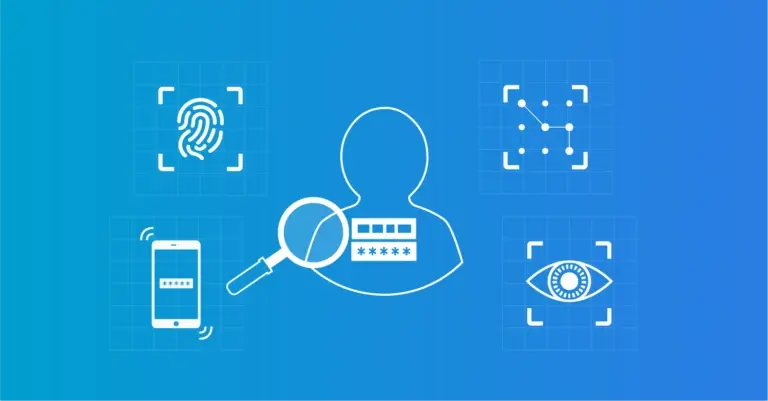
MFA offers a broad range of authentication methods. From traditional passwords and security questions to advanced biometrics such as fingerprints and facial recognition. This provides flexible, robust security that aligns with the needs of any organization.
Rule-Based Authentication
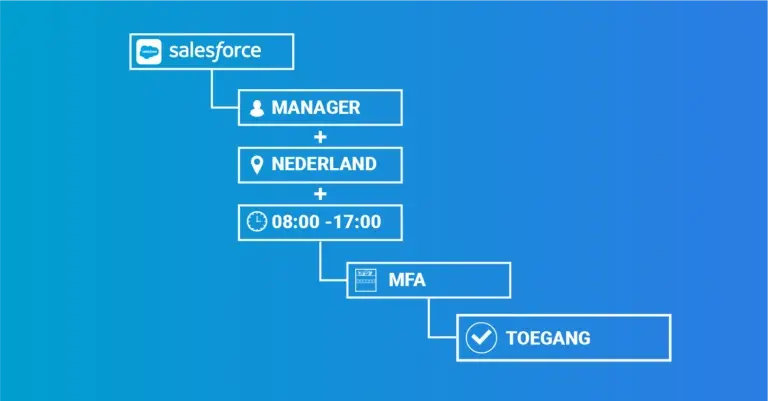
Adapt MFA based on specific business rules. Depending on a user’s role, location, or behavior, you can vary authentication requirements. For example, an employee requesting access to sensitive data may need to complete an additional verification step. This creates a balance between usability and security, with security increased when the risk rises.
Decide How You Apply MFA
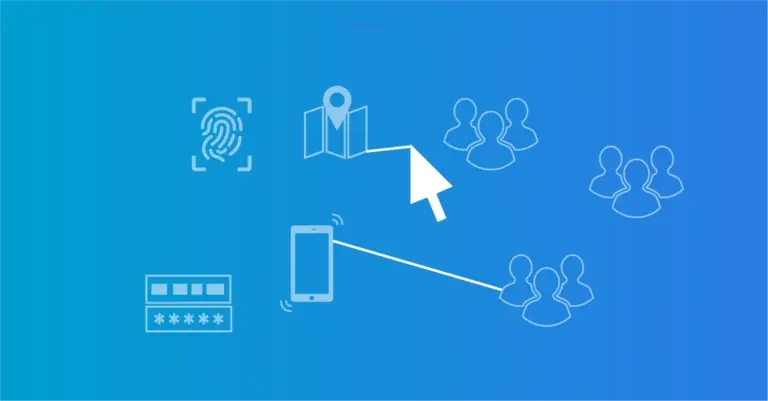
The flexibility of MFA means you can choose how to implement it. Whether you prefer strict security for all users or a more tailored approach for different departments, you remain in control.
-

“When working with healthcare applications and personal data, Multi-Factor Authentication provides a crucial additional access safeguard.”
Leendert BuijtendijkZZG zorggroep -

“HelloID serves as the central access point. Employees only need to sign in once with HelloID using SSO and 2FA. After that, they have access to their personal dashboard with all applications for which they are authorized.”
Erik NeurinkDe Posten -

“After a one-time sign-in via Two-Factor Authentication (2FA) on the social intranet, employees also gain immediate access to their SaaS applications and files thanks to HelloID’s single sign-on functionality.”
Hans KnibbeiHub
Multifactor Authentication & HelloID Access Management
The HelloID Access Management module is part of the HelloID Identity and Access Management (IAM) solution. The module handles user authentication and ensures that only authorized users gain access to your applications and data. As a result, HelloID Access Management provides secure, consistent access to all the resources users need to do their jobs.
Discover What HelloID Can Do For Your Organization
See how our cloud-based IAM solution enables organizations to improve productivity, security, and compliance through automated user and access management while reducing costs at the same time.