







Identity & Access Management (IAM)
Looking for an IAM Solution?
View Our Cloud-Based IAM Solution HelloIDWhat Is Identity and Access Management?
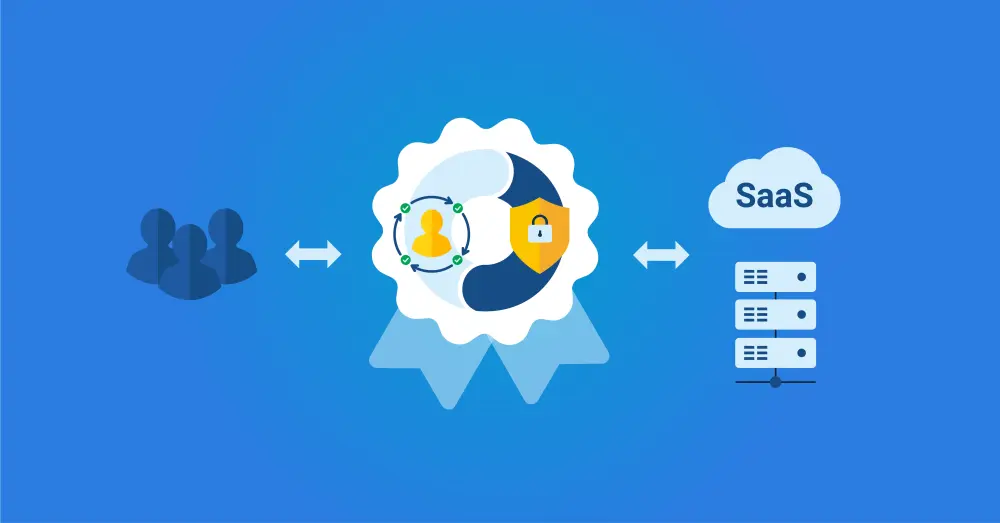
The term Identity & Access Management (IAM) describes all processes within an organization that manage users, authorizations, and access across its digital network. It involves validating user identities and precisely configuring the access rights and procedures that grant users access to business data and applications.
In this article, you will learn everything about IAM, the role of IAM technology, and what to consider when choosing a suitable IAM solution.
Managing Users and Access Rights Within an Organization
IAM has become indispensable in today's digital landscape. A very broad range of business systems and data is accessible through digital channels. To keep these digital assets secure, adequate identity and access control are essential.
Digital systems are also highly interconnected. This means that if an attacker gains a foothold inside an organization, they could, in the worst case, access highly diverse data and applications. An effective IAM process prevents this by checking user identity and access rights for every application and all data they attempt to access.
Why Is IAM Important?
Years ago, IAM was seen by many organizations as a luxury. The main goal was to efficiently automate the repetitive manual processes of creating and managing user accounts and assigning and tracking user rights. That situation has completely changed. Today, there are many reasons why IAM is necessary. These include reducing security risks and demonstrating compliance with relevant laws and regulations. Below are the key reasons.
Improve Security and Reduce Risks
Traditionally, many business systems were accessible to all users. That approach is no longer acceptable. The impact of a data breach can be significant. The effects are not only felt by users but also by affected companies.
IAM elevates your organization's digital security. By continuously validating both user identity and access rights, you ensure that only authorized users can access specific digital assets. This is important because it significantly reduces risk. With IAM, users can access the information and systems they need, only as strictly necessary.
Meet Compliance and Regulatory Requirements
Implementing adequate cybersecurity measures is also critical for compliance with laws and regulations. A well-known example is the General Data Protection Regulation (GDPR), which requires personal data to be properly protected.
In practice, this means organizations must use modern techniques to secure personal data, with the Dutch Data Protection Authority explicitly highlighting the importance of access management.
Improve Efficiency and User Experience
A well-known and sound recommendation is to use unique passwords for every account. An unwanted side effect is that users must remember many passwords, which harms both user experience and efficiency. IAM addresses this. An IAM solution enables users to access all the business applications and systems they need in a user-friendly and efficient way, without having to log in repeatedly. IAM combines optimal identity and access control with a user-friendly approach that raises productivity.

The Basics of IAM
Pillars of IAM
IAM consists of multiple pillars: identification, authentication, and authorization. Below, we cover each pillar.
Identification
Identification is the first step in the IAM access process. Identification allows a system, service provider, or organization to determine your identity. An entity, such as a user, application, or device, thereby presents its digital identity.Authentication
Authentication is the second step in the IAM access process. It includes the processes and mechanisms used to verify an entity's identity. In this step, you check whether the digital identity provided by an entity matches the data you have on record to validate authenticity.Authorization
Authorization is the third step in the IAM access process. Roles and permissions are central in this step. It determines what users can access. After a user has identified themselves and that identity has been authenticated, authorization ensures that entities receive access to the desired systems or data.
What Does IAM Stand For?
Identity & Access Management (IAM) is the umbrella that includes both Identity Management (IdM) and Access Management (AM):
Identity Management (IdM), also known as Identity Governance & Administration (IGA), is the foundation of digital identity, focusing on managing user identities and access rights. It ensures that every identity is unique within the system and governs what users are permitted to do once their identity is established and verified. This process includes creating, managing, and deactivating user accounts, assigning attributes necessary to recognize and verify the user, and assigning access rights that determine which applications and information the user can access.
Access Management (AM), also called access control, is the second half of the IAM puzzle and focuses on managing user authentication within an organization. Where Identity Management concentrates on the correctness and administration of user identities and what they are entitled to, Access Management ensures that users actually gain access to the right data, at the right time, and for the right reasons. This primarily includes the sign-in process.
An organization cannot rely on only one of these elements. A robust Identity Management system without an effective Access Management policy can leave the organization vulnerable, and a well-executed Access Management system has little value without reliable Identity Management. A complete IAM solution manages digital identities, governs the access rights associated with those identities, and provides secure authentication for systems and applications. IAM systems ensure that the right individuals have appropriate access to the resources they need, precisely when they need them.

Core Components of IAM
IAM consists of several core components. Below is an overview of the components.
Identity Lifecycle Management
A workforce is never static and changes continuously. Employees leave for various reasons, such as retirement or joining another organization. At the same time, new employees join, and roles can change within your organization. In practice, this means that identities within your organization go through a lifecycle, also called the identity lifecycle.
You manage this lifecycle within an IAM solution. In practice, this means continuously aligning your organization's identities with changes in your workforce.
Authorization Management
Authorization management is a crucial component of IAM. It is the process in which users are assigned specific rights to access specific data, business applications, and systems.
Like identities within your organization, authorizations change continuously for many reasons. You may adopt a new application, create new roles that require new authorizations, or adjust authorizations based on new insights.
Access Management
Employees often work with a wide range of applications and systems. As noted earlier, the recommendation is to use a unique password for every service or application. This approach offers significant security benefits and prevents leaked credentials for one service from granting access to other services and applications.
At the same time, this approach can reduce efficiency. Employees must remember many unique passwords, and for security reasons, they cannot simply write them on a Post-it note.
Access management is therefore also a core component of IAM. An access management solution can deliver significant ease of use for users and greatly improve efficiency. Proper access management ensures that users need to sign in only once to access all applications, systems, and data they need.
The solution ensures that user access is optimally secured without hindering the user experience. The benefits are broad. Employees no longer have to remember a large number of unique passwords, can work more efficiently, and you raise your organization's security posture.
Auditing and Reporting
Under laws and regulations, it is important not only to secure your systems and data but also to demonstrate that you have done so. Organizations must demonstrate that their processes comply with laws and regulations. All user actions must also be traceable. It must be clear which actions were performed and by which users.
This is possible through audits and reports. A robust IAM solution, therefore, provides extensive capabilities for reporting and auditing. For example, our IAM solution HelloID offers this capability through its Service Automation module. This module ensures that all requests and approval processes can be properly tracked.
The solution provides the evidence you need to demonstrate compliance with applicable information security standards.
The Role of IAM Within a Broader Security Strategy
IAM works synergistically with other security measures. Ideally, IAM is integrated into your broader security strategy. Below are examples of security measures that align seamlessly with IAM:
Zero Trust
Zero Trust is a principle developed by John Kindervag in 2010. The core idea is: 'never trust, always verify'. In practice, this means you no longer assume the existence of a secure internal network, a concept that was central to IT security for a long time.
With Zero Trust, you do not trust anyone by default. You use segmentation by dividing the network into multiple small, secure networks. You then grant users access to segments of your network, but rarely to the entire network.
Authentication and authorization are central to Zero Trust, according to the National Cyber Security Centre (NCSC). These concepts are also indispensable in IAM. It is no surprise that IAM and Zero Trust are closely aligned and synergistic.
Least Privilege
Least privilege is the principle of granting users only the minimum access required to information and systems. You restrict access to the data and applications users actually need to perform their work. Access to all other systems is blocked by default.
Least privilege significantly improves organizational security. If attackers obtain a user's credentials, they would at worst only gain access to the data and systems available to that user, while all other systems remain protected. This limits the impact of a cyberattack.
IAM has strong synergy with least privilege. With effective IAM policies, you ensure that users have access only to the systems and data they actually need.
This means not only fine-tuning rights for individual users or user groups, but also promptly revoking rights that users no longer need. IAM can provide the technical foundation for your least privilege policy.
Single Sign-On (SSO)
Single sign-on is an authentication method that provides users with simple, secure access to all systems they need for work. Users only need to sign in once to access multiple systems and information sources.
This approach has important advantages. Employees can use strong, unique passwords for each application and system without having to remember a multitude of passwords.
IAM aligns seamlessly with SSO. With effective IAM policies, you can specify in detail which authorizations a user has and which systems they can access. SSO is an authentication method, a crucial component of IAM.
What Should You Consider When Choosing an IAM Solution?
There are several factors to consider when selecting the right IAM solution. Ease of use is critical. It enables you to get started quickly and efficiently and prevents the IAM solution from introducing unnecessary complexity.
Ideally, the provider offers extensive support if you run into issues or have questions. A local team that can assist you in your own language can be a major advantage.
It is also crucial that the IAM solution you choose covers all facets of IAM, from identification to authorization. Carefully review the source and target systems the solution supports. You want to maintain your trusted ways of working, which means the IAM solution must support the source and target systems you use.
Example: Choosing Between IDaaS and On-Premises IAM For a Growing Company
Imagine you are a fast-growing technology company with a mix of on-premises and cloud-based applications. You have a small IT team that is already overloaded managing the existing infrastructure and supporting the company's growth.
In this scenario, an IDaaS solution such as HelloID could be an attractive option. With IDaaS, you do not need to invest in additional hardware or software, nor do you need to worry about maintaining the IAM infrastructure. This can reduce the load on your IT team and allow them to focus on other important tasks.
In addition, HelloID provides maximum security through regular assessments by Deloitte Risk Services, which is crucial for a technology company handling sensitive data.
If your company has specific requirements that demand a high degree of customization, or if you want full control over your IAM system and data, HelloID can also be deployed on-premises. This gives you the flexibility to tailor the solution to your specific needs and maintain full control over your IAM system.
The best choice depends on your organization's specific needs and circumstances. It is always advisable to seek professional guidance before making a decision.
Popular IAM Tools
Anyone getting started with IAM will quickly find that the IAM tool landscape is very broad; many popular IAM tools are available. Examples include SolarWinds Access Rights Manager, Oracle Identity Cloud Service, IBM Security Identity and Access Assurance, SailPoint IdentityIQ, and Ping Identity.
Tools4ever provides HelloID, a modern and secure IAM solution that runs entirely in the cloud. The solution addresses all your IAM challenges. It helps your organization comply with increasingly stringent audit and security regulations. The solution is also quick to implement because HelloID is available in the cloud and requires no custom development. The investments required for HelloID are therefore very limited.
Essential for Optimal Security
IAM is an essential component of optimal digital security. With this technology, you can determine in detail which user has access to which systems and data. You also ensure your organization is fully compliant with relevant laws and regulations, which you can easily demonstrate through reporting.
Interested in what HelloID can do and want to experience the solution firsthand? Schedule a demo now!
Not a Tools4ever customer yet, but interested in the capabilities?
Schedule a MeetingRelated Articles
- From Startup to Scale-Up. Who Still Has Access to What?
- Applying the Standards Framework in Education? Work together!
- Tips for Your Reorganization with IAM
- Governance - Recertification
- Governance - Toxic Policies
- Governance - Reconciliation
- Governance - What and Why?
- More secure login with FIDO2?
- 9 best practices for identity and access management (IAM)
- Onboarding checklist