








Give new employees a smooth start
It is the quickest way to stifle excitement about a new job: waiting half an hour at reception, a new manager and colleagues who barely have time, a badge and laptop that are not ready yet, and ending the day alone at a desk with a stack of reading material. You will not be the only one going home with doubts about where you ended up. As an employer you do not benefit from this either.
This is not how you solve the staffing shortage
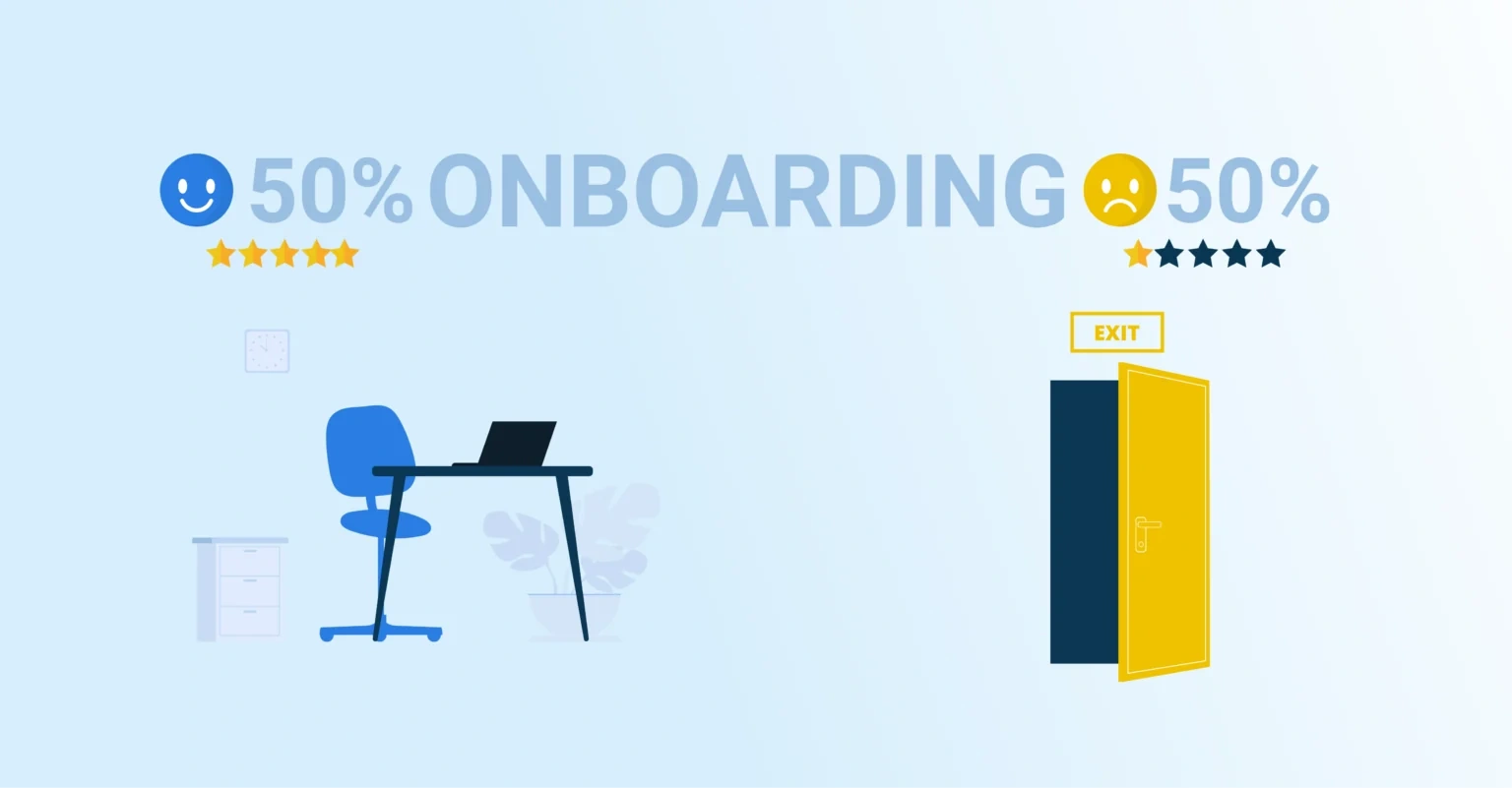
Any HR professional will tell you that with such a chaotic or even missing onboarding the chances increase significantly that someone will soon start looking for something else. In a study by HR and payroll specialist Paychex, only half of employees were truly satisfied with their recent onboarding. Of the satisfied employees, 70% said they wanted to stay with the organization longer, while this was only 10% for employees without proper guidance.
This is something you cannot afford as an employer in a market where you must compete for talent. It harms your employer branding and also creates significant financial losses. The national job board recently calculated that filling a vacancy easily requires a two-month lead time and that the recruiting costs average two months of salary. And that is an average, so there are plenty of employers and sectors where these figures are even higher. You also lose training costs when someone leaves again after a few months.

Productivity also remains a problem
Moreover, with such a poor onboarding you immediately sacrifice productivity. Not only does work remain undone if someone leaves quickly again, but it also takes much longer to make a new employee productive. Especially in the primary processes of organizations the time pressure is high, positions must be filled continuously, and you therefore want people to become independent as quickly as possible.
Healthcare is a typical example of a sector where you want new employees to be able to work independently quickly. The workload is high, patients often cannot wait, and at the same time turnover is significant and contractors are regularly engaged; for example to cover sickness or vacation, but also to absorb a sudden peak such as during the COVID crisis.
That is possible in principle, since in healthcare the competency requirements are often clearly defined and there is extensive use of standard protocols. As a result, a qualified employee can usually get started quickly, provided that on day one the clothing, phone, accounts, access badge, and other data are available. No one is more frustrated than a professional and driven nurse who has to stand on the sidelines because he or she has no access to systems and does not yet have the right equipment. The quality of onboarding therefore has a direct impact on organizational labor productivity.

Effective onboarding and preboarding
In short, there is a strong business case for professional onboarding; it helps your HR manager improve employer branding and retention management while team managers benefit immediately from employees who can become independent more quickly.
Many employers have therefore taken significant steps to professionalize their onboarding. With effective onboarding, the employee follows a clear plan from the day he or she signs the contract. You are assigned a mentor who is responsible for your guidance, there is a clear training plan, and on your onboarding day items such as a laptop, phone, and access badge are ready. You also have timely digital access to all systems and data you need. That is especially important now that more roles are hybrid and onboarding often takes place partly from home. Remote and hybrid employees in particular were critical of their onboarding experiences in the Paychex study.
Many organizations still miss opportunities in the period between signing the contract and the actual start date. That is precisely when people already want to know more about where they will be working and often have many practical questions. Therefore more organizations are investing not only in onboarding but also in a so-called preboarding. People then receive access to email, intranet, and business systems well before the start date. Through an online instruction program you can already get to know the new department and activities in more detail and you can try out the new software. You also get access to the HR portal and you already meet the new colleagues and manager online. This way you know much better before the first day where you are going.
Such modern onboarding and preboarding offer only advantages. The direct manager welcomes a new employee who can be productive faster, and as an employee you naturally feel much more comfortable when not everything is entirely new and you can contribute immediately.
Smart onboarding and preboarding with HelloID
As an IAM specialist we are increasingly involved in the onboarding and preboarding plans of our customers. You naturally use other systems for information delivery, online tutorials, and onboarding workflows, but HelloID ensures that every new employee receives timely access to the right applications and data. A few examples:
An employer activates all IT facilities 30 days before a person’s onboarding, including the correct accounts and access rights. Sensitive data remains automatically blocked until the actual onboarding day.
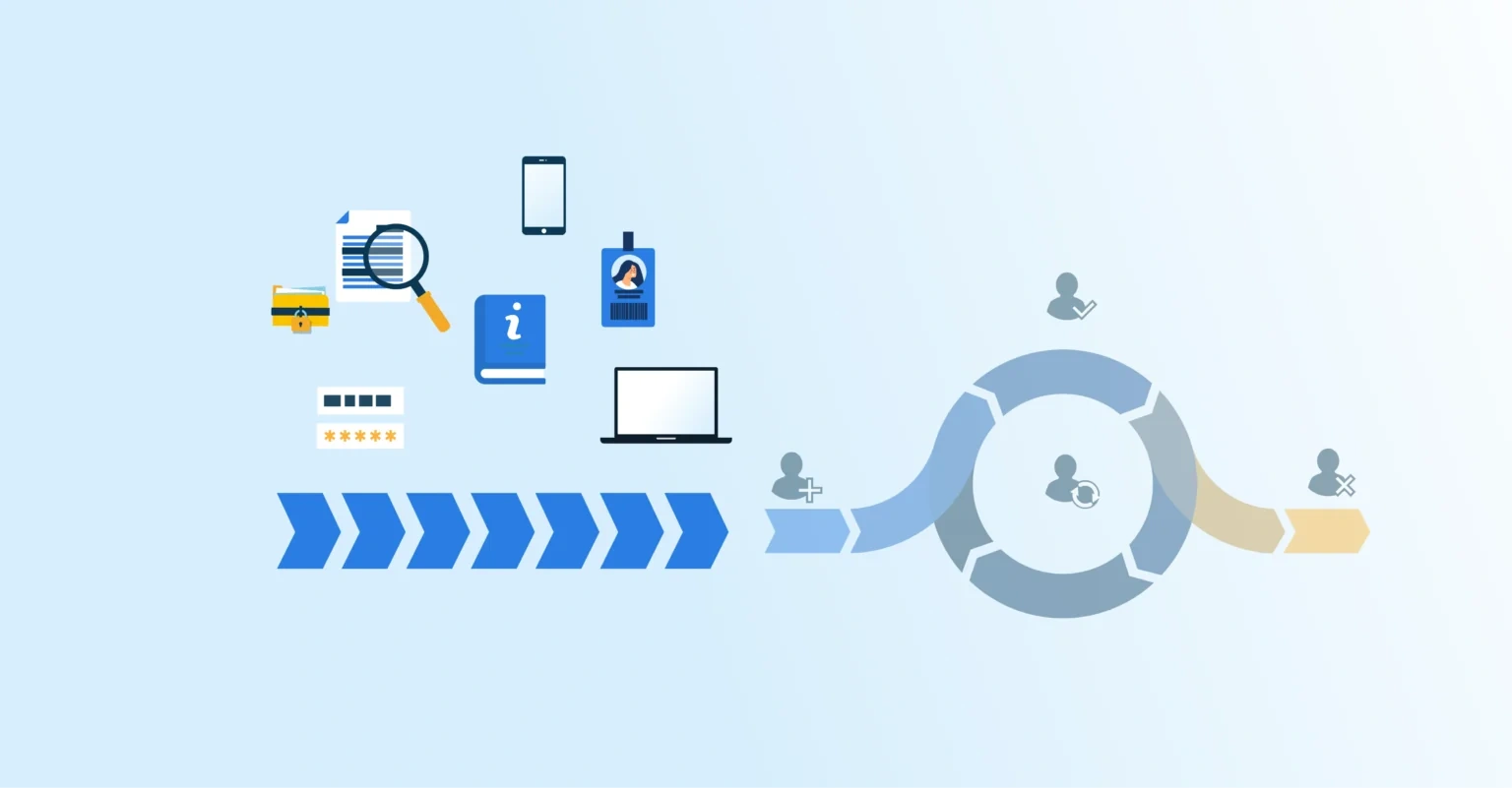
HelloID can also automatically create a service management account in, for example, TOPdesk. Through an automated workflow you ensure that on the day of onboarding physical items such as laptops, smartphones, and access badges are ready.
Magentazorg is an example of a healthcare organization that has already included the care system (Nedap Ons) in its preboarding. As a new employee you can already become familiar with the software, view your planned schedule information, and even submit your own scheduling requests. Through HelloID it is configured that you cannot view client data until the day of onboarding.
For Magentazorg this step toward preboarding was also very important. They shared more about this in our case study:
“Previously, new employees only received access to the IT systems at their onboarding. A real nightmare because then everything is new while you just want to get started on that first day. We have now solved this and a new employee already gets a month of access to the intranet and systems.”

Identity lifecycle management starting at preboarding
With HelloID you can configure automated provisioning of accounts and access rights for your preboarding and onboarding. We can set business rules so that new employees already receive the right accounts and permissions 30 days before the start date based on the person’s role, department, and other attributes. By first assigning a temporary role you prevent immediate access to sensitive data. On the day of onboarding you automatically switch to the person’s definitive role so that the employee then has all rights needed to perform the job. Curious how this works in detail? Learn more about using the Provisioning Module for automated account and access management.