







Cybersecurity
What is Cybersecurity?
Cybersecurity is the umbrella term for technologies, processes, and methodologies that organizations apply to protect the confidentiality, integrity, and availability of their computers, networks, software, and data. These three security objectives: Confidentiality, Integrity, and Availability, are collectively called the CIA triad of cybersecurity. It is not limited to technical measures such as firewalls, encryption, or antivirus tools. Security processes such as risk management, prevention, and incident response are also part of your cybersecurity program. Employee security awareness is often the most important factor.
Why is cybersecurity important?
The importance of cybersecurity continues to grow as information technology becomes increasingly critical. IT systems are no longer merely administrative tools for companies and institutions. Business processes are being fully digitized, from initial product development through service delivery and invoicing to end customers. A breach in your digital systems can bring an organization to a complete standstill, resulting in revenue loss and claims for damages. The impact usually does not remain limited to a single organization. More parties are affected, and sometimes entire sectors are affected. It also does not stop at national borders, so we must address cybersecurity holistically.
A growing area of focus is the protection of personal data. Digitization is not limited to processing financial and business data. Increasing volumes of data about consumers, students, patients, and employees are stored and processed as part of your digital transformation. Privacy is critical, and data breaches that expose such personal data can lead to significant claims for damages and fines from authorities.
Your digital environment often forms the core of your operations, which makes cybersecurity a boardroom topic today. Information management should be owned at the management level by the CIO, and the ultimate owner for cybersecurity, the Chief Information Security Officer (CISO), is now a key player.
Three Pillars of Cybersecurity
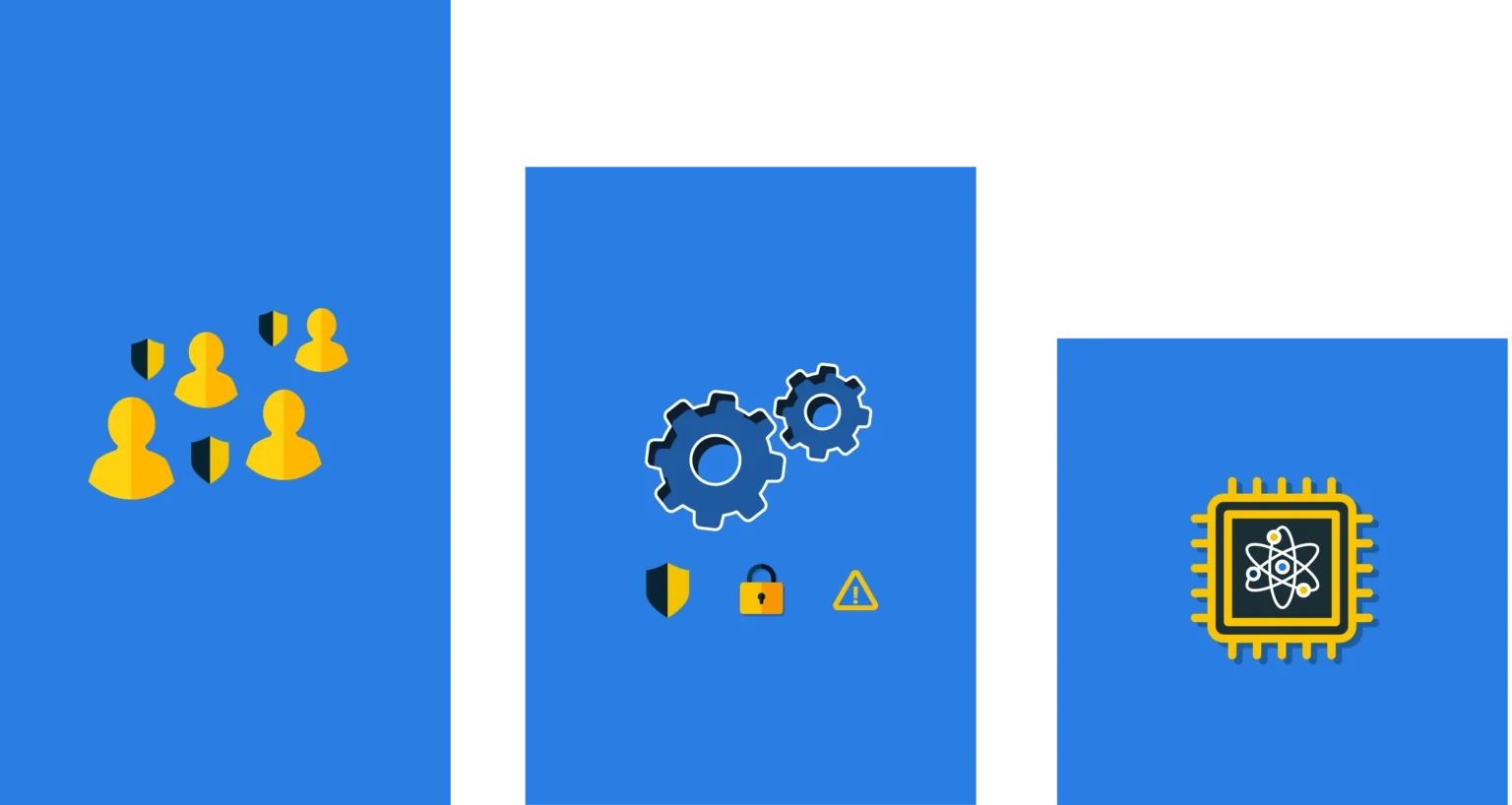
Modern cybersecurity rests on three pillars that are equally important and must be organized:
The focus often naturally falls on technology as the first line of defense against cyber threats. Examples include access control systems, firewalls, antivirus software, encryption, and intrusion detection systems.
Business processes are just as important. It is crucial to implement processes, guided by a clear security policy, to identify threats, respond to cyber incidents, and recover from any damage.
Employees may be the most critical factor for your cybersecurity. They may unknowingly click phishing emails, write down a password on a laptop, or fall for social engineering calls. By providing better training and investing in a security culture, you can turn them into a first line of alert and capable staff. One useful initiative is Cybersecurity Awareness Month, which is held every October.
All of the above aspects are important. In a sound cybersecurity strategy, you build one cohesive group of people, processes, and technology. You can see this in the NIST Cybersecurity Framework. In that framework, you start by identifying critical systems, data, and risks. You then design and implement protective measures, as well as methods to detect cyber threats and incidents, respond effectively, and restore any system damage.
Types of Cyber Threats
There are many types of cyber threats. Examples include:
Malware, malicious software, is a collective term for software specifically designed to attack IT environments. Examples include viruses that corrupt data or disrupt systems; worms that replicate and overload networks; ransomware that holds data hostage; and spyware designed to steal data.
Phishing is a commonly used tactic in which criminals attempt to steal sensitive data, such as login credentials, via email or social media. The messages used are increasingly professional, which leads the victim to believe they are communicating with a trusted party.
Distributed Denial of Service, DDoS, is a cyber threat in which large numbers of computer systems are infected and used to send traffic to servers, websites, or networks. The goal is to overload those systems.
Zero-day exploits are the practice of hackers exploiting newly discovered weaknesses in software and hardware before the vendor has developed a patch.
SQL injection attacks target systems by injecting malicious SQL code into the input forms of online applications.
Brute-force attacks and credential stuffing are automated methods for stealing and abusing credentials. Brute-force methods attempt to guess passwords automatically, while credential stuffing uses known username and password combinations and attempts them at scale across websites and online services.
These are just a few examples, and some attacks may remain undetected. Organized criminals and state actors invest in Advanced Persistent Threats, APTs, a long-term presence in a network without detection. Cybersecurity specialists also face the challenge that threats evolve rapidly. This is why ISO 27001, an international standard for information security, emphasizes a strong plan-do-check-act cycle within organizations. You must regularly update your risk analysis and continuously adjust your security controls. In cybersecurity, standing still always means falling behind.
Types of Security
The above shows that cybersecurity requires a holistic approach. These are not isolated topics; you must understand the relationships among different security risks to design an effective cybersecurity strategy. At the same time, no organization can do everything well, so you will generally work with several specialized cybersecurity companies and services that focus on specific areas. Examples include:
Network security focuses on protecting networks with firewalls, Virtual Private Networks (VPNs), and intrusion detection and prevention systems.
Endpoint security secures user devices such as computers, smartphones, and tablets. This includes antivirus software and device management systems.
Application security protects applications against vulnerabilities. This includes automated deployment of updates and patches, as well as robust development and testing methods.
Cloud security protects cloud systems, data, and services, including access controls and encryption of cloud data.
Information security focuses on the confidentiality, integrity, and availability of all data. In addition to data encryption and access management, data classification is used.
By organizing and managing digital identities and their access rights across the entire lifecycle in a structured manner, we ensure that every user has access only to the applications and data they actually need at any given time. This prevents unauthorized access to your systems and helps avoid data breaches.
Want to know more about organizing your cybersecurity? Click here. Would you like to learn more about your information security and how comprehensive identity management plays a role in it? Tools4ever can help.
Related Articles
- How do you prevent credential phishing?
- Not IAM Compliant Yet?
- Smarter information and access security with AI
- Stopping Privilege Creep in its Tracks
- Securing the Kingdom: Lessons in Identity and Access Management from King Arthur’s Camelot
- What is a Privileged Account?
- 4 Ways an IAM Solution Can Benefit Healthcare Organizations
- How a Service Automation Solution Helps Your Organization
- Why Do You Need an IAM Solution?
- Why Cyber Security Insurance Policies Are Requiring MFA