







IAM vs IGA: What Are the Differences?
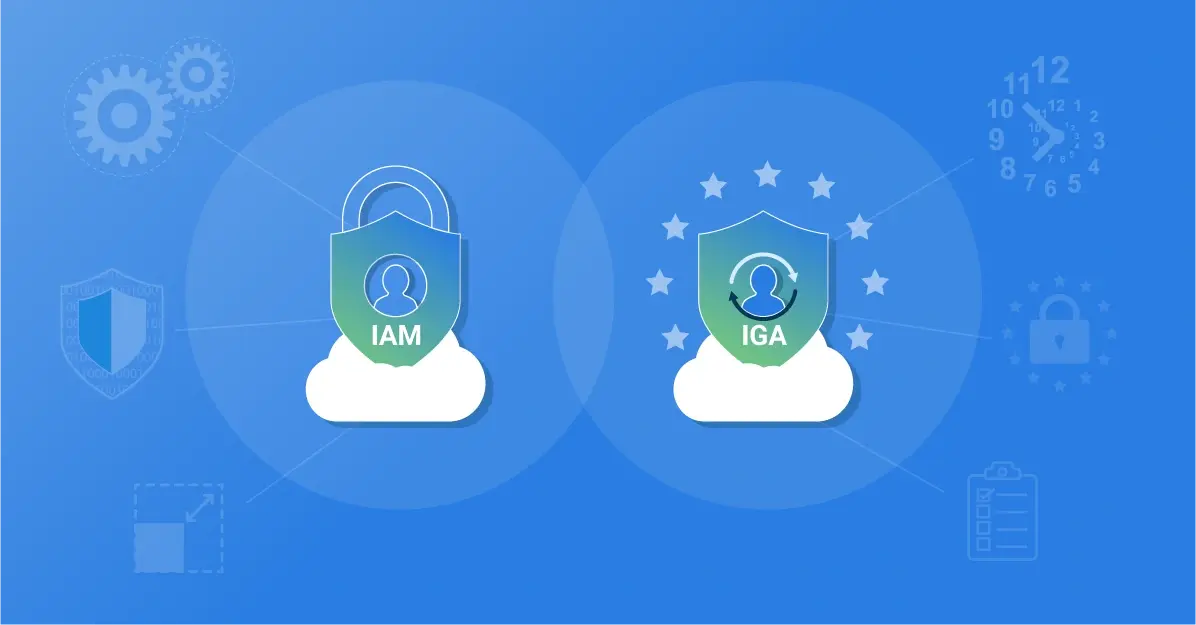
Identity Access Management (IAM) and Identity Governance & Administration (IGA) are two terms that appear frequently. Although the terms may seem very similar at first glance, there are significant differences. In this article, we dive into the world of IAM and IGA, outline the differences, and highlight their role in IT security.

What is IAM?
The term IAM stands for Identity & Access Management and refers to the management of digital identities and access rights. On the one hand, IAM ensures that authorized users have an account in time. On the other hand, through access rights, also called authorizations, you ensure that these identities have access to the right systems, applications, and data.

What is IGA?
IGA, Identity Governance & Administration, is a term that also refers to the management of digital identities and access rights. The focus, however, is on meeting security and compliance requirements.
This means, among other things, that with IGA you focus on managing the user lifecycle, from creating a user to the eventual removal. It also includes monitoring access rights so that you can be certain that authorizations are up to date and that users only have access to systems for which they are actually authorized.

What are the differences between IAM and IGA?
Although IAM and IGA are both related to the management of identities and authorizations, there are fundamental differences. We list several key differences.
Primary focus
IAM focuses on managing identities and authorizations in order to provide secure and efficient access to systems and data. IGA focuses on governance and compliance with laws and regulations as well as certification requirements.
Managing accounts and rights or the lifecycle
IAM primarily revolves around configuring accounts and assigning the correct authorizations, so that users gain secure and efficient access to the resources they need. IGA goes a step further and focuses on managing the full lifecycle of a user. This is important, because when an employee leaves the organization or changes roles, you want that user's account to be adjusted quickly and correctly.
Different capabilities
Because the focus of IAM and IGA differs, each includes different capabilities to support that focus. IAM includes capabilities such as authentication, authorization, user management, and access management. You use these to verify user identities, determine which authorizations they may have, and manage both accounts and authorizations. IGA includes capabilities such as user lifecycle management, access certification, RBAC, and compliance and audit reporting. You use these capabilities to manage the lifecycle of identities, carry out periodic reviews of authorizations, and prepare reports for audits.
Who is the user?
IAM is a term that both administrators and end users deal with directly. Administrators manage user accounts and authorizations through IAM, and users gain access through IAM to the resources and systems they need to do their work. With IGA, that is less the case; administrators, auditors, and compliance officers in particular work directly with IGA. The focus of IGA is on governance and on compliance with laws and regulations and on meeting requirements for certifications.
Other integrations
Another important difference is how IAM and IGA integrate with other systems. With IAM, you integrate directly with the applications and systems that end users use, so that you can efficiently grant users the right access. For IGA, integrations with other IAM systems and governance tools are important, so that you can ensure that accounts and authorizations comply with laws and regulations and that you can pass audits successfully.
The points above are a selection of the differences between IAM and IGA. In short, IAM can be seen as a component of IGA, with a specific focus on user identities and their access rights within an organization's network. IGA is the umbrella term that refers to processes that allow organizations to ensure that identities and authorizations are managed, secured, and tracked in line with laws and regulations and certification requirements.
More information
If you want to learn more about IAM and IGA, review our knowledge base, where we explore both IAM and IGA in more detail.