






Single-Factor Authentication (SFA)
You can implement authentication within IAM in several ways. You can choose single-factor authentication (SFA), two-factor authentication (2FA), or multifactor authentication (MFA). The basic idea behind the three options is the same; the number of steps and the credentials used differ.
What is Single-Factor Authentication?
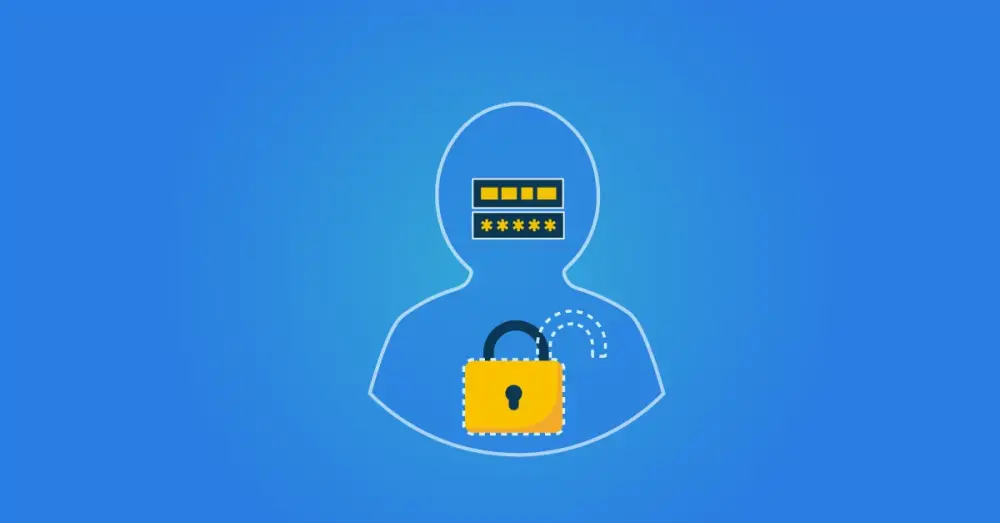
Single-factor authentication is the simplest and most basic form of authentication. You use only one credential to verify the digital identity when you want access to a device, application, digital environment, or online service. In most cases this is a self-selected or assigned password that you enter after providing your username. Especially in a B2C context, such as an online store or digital services, it remains the most commonly used verification method.
Signing in to your favorite online store. Unlocking your smartphone after it has been inactive for a while. Viewing or updating your booked vacation in the travel company’s portal. These are all examples of single-factor authentication that we encounter frequently in daily life.
What is the Advantage of Single-Factor Authentication?
The main advantage of single-factor authentication is straightforward: it is a fast and easy verification method. You complete very few steps, for example after entering your password you can access the desired device, file, or system with a single click, and you only need to remember and have your username and password available.
Is Single-Factor Authentication Insecure?
If you have a strong, hard-to-crack password, single-factor authentication is not necessarily insecure. However, you are more vulnerable with this method than when you use two-factor or multifactor authentication. Access to your password is sufficient for hackers or cybercriminals to gain entry to your applications, files, systems, or services under the guise of your identity.
There are several ways hackers can obtain your password. They may know you personally or have personal information that is often used in passwords. Common examples include birth dates, your place of residence, your pet’s name, or the names of your favorite actors and artists. Cybercriminals also use bots that can crack the right combination of letters, numbers, and special symbols through 'brute force'.
In general the following rule applies: if a password is easy to remember, it is also easy for hackers and cybercriminals to guess and crack. Single-factor authentication is therefore only effective when you combine it with strong password management.
If a hacker breaks through the relatively thin security barrier posed by the combination of single-factor authentication and a weak password, recovering your accounts often takes a lot of time and effort. If you also use the same password for different applications, the attacker can abuse your digital identity in multiple places.
A Simple but Outdated Method
All in all, single-factor authentication is a simple and convenient way to verify a user’s identity. The growing consensus, however, is that single-factor authentication is now an outdated concept. It once worked well, but is no longer adequate against today’s cyber threats. We therefore see two-factor and multifactor authentication becoming the standard, especially in business environments. This is a logical development, since these methods provide a significantly higher level of security. Their use can be more complex and time-consuming. Organizations should therefore weigh these approaches carefully and select the one that best meets their security requirements.