





Free Demo Contact
Use Case

Mergers & Acquisitions

Migrate to a unified IAM solution when merging two or more organizations with their own IAM solutions.
CHALLENGE

How do you enable users from different partner organizations to collaborate quickly?

After a merger, organizations often want employees from the different partners to collaborate as quickly as possible. This requires rapid access to each other's systems. Depending on the merger plan, users are then gradually integrated into a single, uniform account and access management model.

SOLUTION

Centralized Account and Access Management Based on User Roles

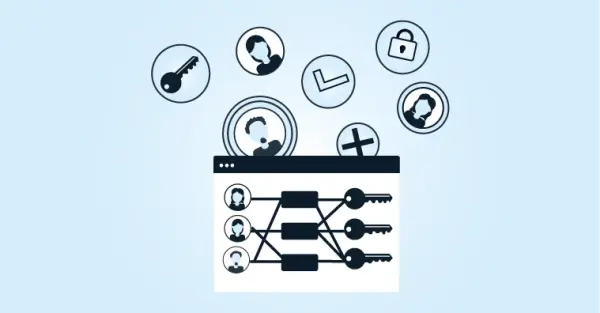
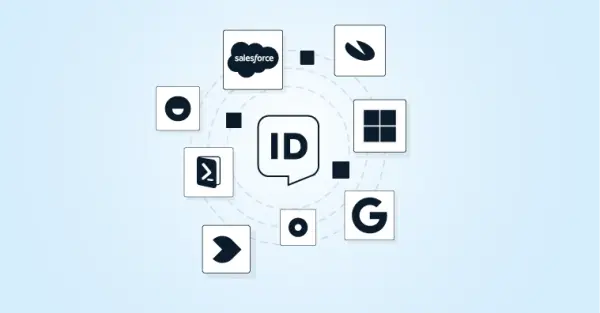
HelloID can connect multiple source and target systems, implement an organization-wide RBAC structure, and, through flexible Access Management, federate multiple Identity Providers. This enables a fast, controlled migration from two or more IAM environments to a consolidated Identity and Access Management environment.

Coordinated Provisioning

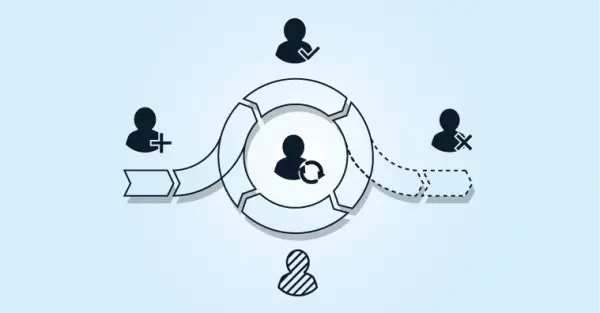
  • Automated account and access rights management across the entire account lifecycle (onboarding, changes, offboarding)

  • Additional source systems can be connected, for example, to onboard employees from merger partners.

  • Target systems from merger partners can be integrated gradually.

  • Any remaining differences in roles and associated permissions can be incorporated into the Role-Based Access Control framework, for example, with a role mining session.

  • Any remaining operational differences can be handled with additional or customized Business Rules.

Unified Service Automation

  • Automated requests for additional and or temporary access rights, with configurable approval steps and duration.

  • Automation on three levels: delegated forms for helpdesk agents and or managers, and a self-service portal for end users.

  • Automation can be scheduled per service process.

  • This results in a unified service portal for all merger partners.

Flexible Access Management Scenarios

  • Access Management supports flexible access scenarios during the migration. For example, rapid application access for employees of merger partners.

  • Access Management can provide connections between Identity Providers of merger partners for the migration.

  • Enable access not only for your own employees but also, gradually, for other user groups such as contractors, clients, or partners.

HOW IT WORKS

How We Implement Integrated IAM in a Merger

Seven steps that can each be configured with low code or no code

  1. Source System: Integrate HelloID with source systems such as HR, SIS, and or scheduling systems. Changes to the source data are automatically available in HelloID.

  2. People: Transform person and role data from source systems into a common representation within HelloID using an identity vault.

  3. Business Rules: Define rules that determine which roles receive which types of accounts and access rights, and under what conditions.

  4. Target Systems: Connect HelloID to on-premises and or cloud applications. This can be executed step by step per application.

  5. Service Processes: Automate processes, including online approval flows and activation in target systems. This can be executed per process as a separate step.

  6. Access Management: In coordination with, for example, Active Directory, configure access procedures such as Single Sign-On (SSO) and Multifactor Authentication (MFA).

  7. Reporting and Auditing: Configure standard and customer-specific reports and monitoring functions for analysis and audits.

FAQ

Frequently Asked Questions

What makes HelloID ideal for mergers and acquisitions that involve multiple IAM solutions?

HelloID is designed to be flexible and adaptable, which makes it easy to connect multiple source and target systems. In mergers and acquisitions, the platform can quickly consolidate IAM solutions from different organizations into a single, uniform system. With the organization-wide RBAC structure, flexible Access Management, and support for multiple Identity Providers, HelloID enables a smooth migration to an integrated IAM environment for all parties involved.

How does HelloID ensure the consistency and security of access rights during the migration process after a merger or acquisition?

HelloID provides automated account and access management throughout the full identity lifecycle. As a result, all changes to access rights are managed consistently and securely. In addition, differences in roles and associated permissions arising from a merger or acquisition can be integrated into HelloID's Role-Based Access Control framework. This approach ensures that access rights are managed uniformly and securely, regardless of the original IAM solutions of the merging organizations.

How is the end-user service experience affected during and after the migration to a shared IAM environment?

HelloID aims to provide a seamless, uniform service experience for end users. During the migration, automation and access management are used to ensure consistent and fast access to required applications. After the migration, users benefit from a unified service portal, which makes it easy to access the systems and applications they need. They can also benefit from features such as Single Sign-On (SSO) and Multifactor Authentication (MFA) to provide a secure, user-friendly access experience.

What is a role mining session?

Creating a solid role model is the foundation for an organization's account and access rights management. If a complete role model is not yet available, for example, in a merger, you can still get started with a role mining session. Role mining provides a practical approach to quickly and easily defining a role model. By combining HR and user network data, you gain insight into which roles exist in your organization and determine which should be assigned automatically and which should be configured as optional, requestable roles.